
Homeowners' pick for heating and cooling across the Arkansas Ozarks and Little Red River country
Gas Smell Near the Furnace
You walked past the furnace and caught that rotten-egg smell. Maybe it's faint, maybe it hits you at the top of the basement stairs. You want to know if it's serious and what to do right now. Here's the short version: get everyone out of the house first, call for help from outside, and let a technician handle the system.
Call (888) 381-2953- A real person answers
- Open 7 days
- Written quote before work starts
Taking calls until 5:00 PM CT
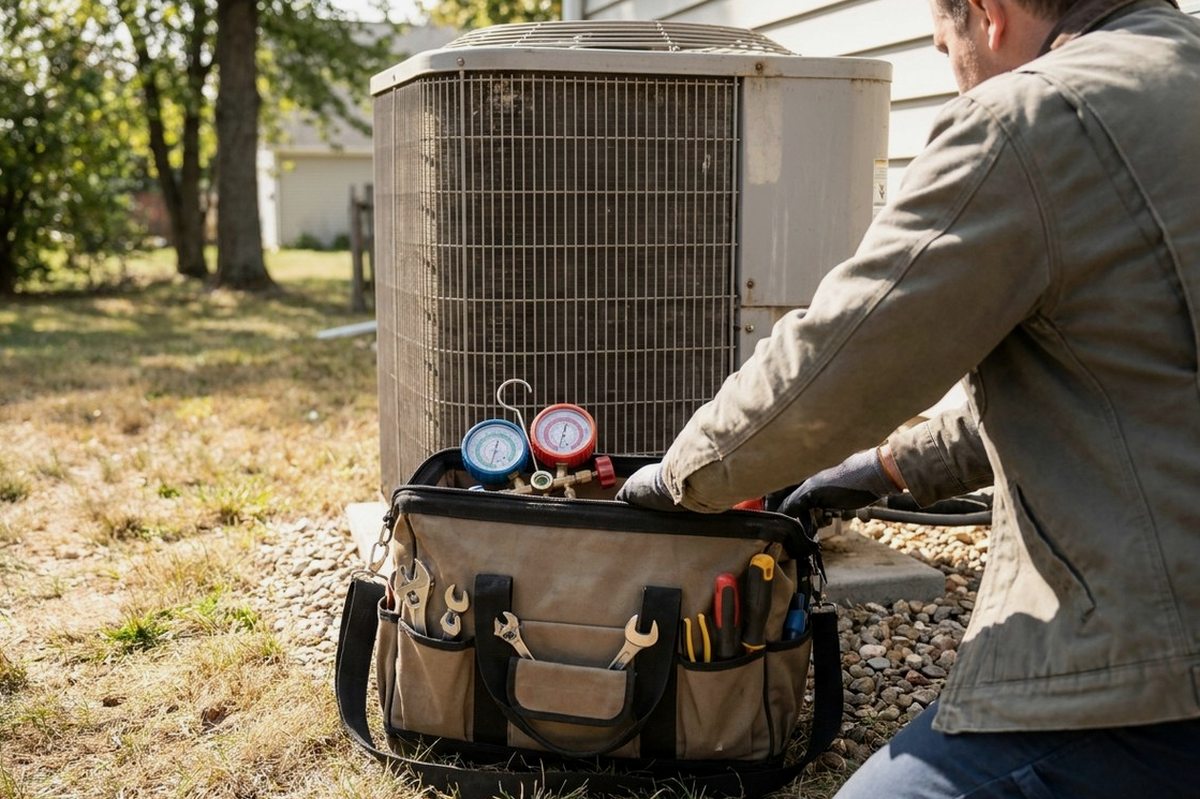
Ozark Comfort Heating & Air service team · field-reviewed before publishing
Step One: Get Out, Then Call From Outside
If you smell gas near the furnace, leave the building with everyone in it, then call 911 or your gas utility from outside. Do that before anything else. Don't stop to find the source, shut valves or pack up. Walk out the door, take pets if they come easily, and move well away from the house. Make the call from the yard, the sidewalk or a neighbor's place. The gas utility will send someone to check the line and shut off supply if needed. This is the same advice across Arkansas, Missouri, Mississippi, Oklahoma and Tennessee, and it holds whether the smell is strong or barely there.
What Not To Do
Once you smell gas, don't touch anything that can make a spark. That means no light switches, no garage door opener, no thermostat adjustments, no unplugging anything. Don't light a match or a candle and don't smoke. Leave your phone alone until you're outside. Don't try to relight a pilot, tighten a fitting or spray anything on gas lines looking for bubbles. Don't open the furnace cabinet. Opening windows sounds helpful, but not if it means walking deeper into the house to do it. Just go out the nearest door and leave it at that until the utility clears the building.
Carbon Monoxide Is A Separate Problem
Carbon monoxide has no smell, so a gas odor and a CO problem are two different things. If your CO alarm sounds, treat it exactly the same way: get everyone outside and call 911. Symptoms show up as headache, dizziness, nausea or unusual sleepiness that eases when you step outdoors, and more than one person in the house feeling it at once is a strong signal. Don't wait to see if it passes. CO comes from incomplete combustion, often a cracked heat exchanger or a blocked flue, and those need a technician with a combustion analyzer, not guesswork.
When To Call Us
Call us after the gas utility has been out and shut off or cleared the supply. At that point somebody has to find out why the furnace was leaking or venting wrong, and that's our work. We test gas pressure, check the valve and burners, inspect the heat exchanger, and look at the flue and combustion air. On older equipment in hill country we often find corroded vent pipe, a nesting bird in a flue cap or a gas valve that's been slow-leaking for a season. If the furnace needs parts we tell you what we found and what heating repair involves before we touch it.
After The Repair, And Before Next Winter
Once the furnace is back in service, a few habits cut down on repeat calls. Put a working CO alarm on every level and near sleeping areas, and test them when the clocks change. Keep the area around the furnace clear of stored boxes, paint and anything flammable. Change the filter on schedule so the blower isn't fighting for air. Have the system looked at before heating season, especially if you run propane or lean on a wood stove for backup and the furnace sits idle for weeks. We schedule ahead across the region because travel time on rural routes is real, so early calls get better slots.
Gas Smell Near the Furnace — what people ask
The gas smell is very faint. Do I still need to leave?
Yes. Leave and call the gas utility from outside. A faint odor can mean a small leak or a leak somewhere you can't see, and nobody can judge the size of it by nose. Let the utility check the lines.
Can I turn off the gas myself before I go?
We don't ask homeowners to do that. Going toward the furnace or meter to shut a valve puts you closer to the gas. Get out first and tell the utility. They shut supply off as part of their response.
Why does my furnace smell for a minute when heat first comes on in the fall?
That's usually dust burning off the heat exchanger, and it fades within a few minutes. A rotten-egg or sulfur smell is different, and that one means leave and call the gas utility right away.
How it works
- Step 1
Tell us the symptom
Call or fill in the quote form with what the system is doing. Warm air, no air, short cycling, a smell, a breaker that keeps tripping. That detail helps us load the right parts before we roll.
- Step 2
We schedule around travel
Hill-country routes take time, so we give you a realistic window instead of a guess. If you are on a long county road, we tell you that up front and keep you posted if the day shifts.
- Step 3
Diagnose, then explain
We test the system, find the actual fault and walk you through what failed and what the repair involves. You decide before we start. If a part has to be ordered, we say when it lands.
- A real person answers
- Open 7 days
- Written quote before work starts
Why homeowners call us
- Older systems are normal herePlenty of homes on our routes run a heat pump from two decades back, a propane furnace and a wood stove for the cold snaps. We repair what you have rather than pushing you toward replacement on the first visit.
- Heating and cooling bothSame crew handles air conditioning repair in summer and heating repair in winter. That means we know your system's history when the season flips, and we are not learning your ductwork from scratch in January.
- We say what we do not knowIf a fault is intermittent, we tell you that instead of replacing parts on a hunch. Sometimes the honest answer is a monitoring period or a second visit when the weather brings the problem back.
- Regional coverage, local paceWe cover Arkansas, Missouri, Mississippi, Oklahoma and Tennessee. Travel time is part of every job we quote, so you get a window that accounts for the drive rather than a promise that falls apart.
- All major brands, gas & electricEvery major HVAC brand, gas and electric, handled by an independent crew.
- Straight answersNot worth fixing? We say that out loud, and often it saves you the visit fee.
About this guide
Past the safe checks, it's a job for tools and a meter
Describe what you found and we'll take it from there. Booking takes about a minute.
- A real person answers
- Open 7 days
- Written quotes
- All major brands
- Gas & electric
Rather not call? Get a free quote →